Best Learning Toys for Toddlers (2026)

The toddler years are mostly about the body and the hands. Between one and three a child learns to walk, then run, climb, and stack; their fingers go from raking to a precise thumb-and-finger pinch; and language pours in. The best toys at this age aren't the ones that light up and talk — they're the ones that hand a toddler something real to do with all that new ability.

So we kept only toys we'd actually give a toddler — every one from a maker with a real track record, most of them simple wood or one-trick classics, with a genuine developmental reason behind each choice.

🧸 Curating learning toys since 2004 Independent picks · no pay-for-placement

What toddlers are working on

Shopping well for this age gets easier once you picture what a toddler is actually practicing. The body comes first: they're learning to walk, then to push, pull, climb, and pound, so toys that move with them — push toys, pound benches — get used hard. Their hands are catching up fast, trading a clumsy whole-fist grab for the pincer grasp that crayons and, eventually, pencils will need, which is why chunky-knob puzzles and feed-the-animal toys pay off now.

And the first real puzzles click into place — fitting a shape through a hole, threading a ring on a peg, matching a picture to a sound. A toddler learns every bit of it by holding and doing, not by being told, so concrete, hands-on toys beat anything with a screen or a lecture-on-a-chip. The best toddler gift is usually the simplest one in the aisle: the one that quietly says "you try."

First sorters & stackers

The foundational toddler toys: drop a shape through a hole, thread a ring on a peg. These teach the first puzzles a toddler can actually solve — and reward the focus it takes to do it.

Shape Sorting Cube
Editor’s pick · Melissa & Doug

Shape Sorting Cube

The toddler classic, and the one we'd buy first. Twelve chunky wooden blocks each drop through a matching hole in the lid — simple to describe, genuinely hard for a not-quite-two-year-old, and a small, real triumph when the triangle finally goes in. Shape sorting is one of the first puzzles a toddler can actually solve, and the wood here is solid enough to survive being flung, chewed, and stepped on. It quietly does its job for a year or two, then becomes a block set. No batteries, no noise, no nonsense.

Builds: shape recognition · problem solving · hand-eye coordination

~$11· See it on Amazon
Geometric Stacker
Best first stacker · Melissa & Doug

Geometric Stacker

Stacking rings, grown up. Three wooden pegs hold rings, squares, and circles that a toddler threads on and pulls off a hundred times — and unlike the wobbly plastic version everyone owns, the pieces are chunky and the colors are clean. The hidden lesson is ordering: big ring on the bottom, small on top, which is early math a toddler learns with their hands long before they could say it. It grows with them, too — at one it's "put ring on peg," at two-and-a-half it's sorting by color and shape.

Builds: fine motor · color sorting · size sequencing

~$16· See it on Amazon
Animal Rescue Shape-Sorting Truck
Best sorter + play · Melissa & Doug

Animal Rescue Shape-Sorting Truck

A shape sorter a toddler keeps playing with after they've mastered the sorting. Seven animal-shaped blocks drop through matching holes in a wooden truck, then roll away as a pull-along with two little play figures along for the ride — so the toy graduates from "fit the shape" to "drive the animals to the rescue." That second life is what most sorters lack. The pieces are big enough to be safe and small-hand friendly, and the wood holds up to toddler enthusiasm.

Builds: shape sorting · pretend play · fine motor

~$16· See it on Amazon

Up on two feet

Toddlerhood is, above all, learning to move. These get a new walker across the room and a restless toddler pounding, pushing, and pulling with purpose.

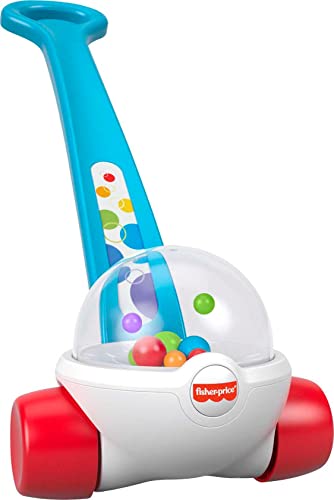
Corn Popper Push Toy
Best for new walkers · Fisher-Price

Corn Popper Push Toy

The push toy that's outlasted generations for one reason: the popping balls give a brand-new walker a reason to keep going. A toddler who's just found their feet pushes it forward, the balls pop and clatter, and the delight pulls them across the whole room — exactly the practice unsteady legs need. It's about the most low-tech "developmental" toy there is, and that's the point: the motivation is built into the mechanics, not a speaker. Hardwood floors make the most racket; rugs mute it if you need mercy.

Builds: gross motor · cause & effect · walking confidence

~$14· See it on Amazon
Pound & Tap Bench with Xylophone
Best cause & effect · Hape

Pound & Tap Bench with Xylophone

Two toys in one, and both land squarely in the toddler wheelhouse. Pound the wooden balls through the top with the mallet and they tumble down onto the xylophone, which slides out to play on its own — so "I hit this and music happens" becomes a discovery a toddler makes themselves. Pounding is also a real fine-motor and arm-strength workout disguised as pure fun. The xylophone is actually tuned, so it's not the ear-splitting clatter most toddler instruments are. Sturdy wood that survives serious whacking.

Builds: hand-eye coordination · cause & effect · musicality

~$18· See it on Amazon
Pound & Roll Tower with Hammer
Best for pounding energy · Melissa & Doug

Pound & Roll Tower with Hammer

Made for the toddler who wants to hit things — channeled productively. Whack a colored ball with the wooden mallet, it disappears into the tower, then reappears rolling down a spiral ramp at the bottom. That "where did it go? there it is!" loop is object permanence and cause-and-effect in action, and the aiming is real hand-eye practice. The mallet gives all that pounding energy a job, which any parent of a one-and-a-half-year-old will appreciate. Solid wood, sized for toddler hands.

Builds: hand-eye coordination · cause & effect · color recognition

~$17· See it on Amazon

Little hands at work

The pincer grasp — thumb-and-finger pinch — is the quiet star of these years; it's what handwriting will need later. These build it through play, not practice.

Huey the Fine Motor Hippo
Best fine-motor · Learning Resources

Huey the Fine Motor Hippo

The occupational-therapist's quiet favorite for the youngest hands. Toddlers feed chunky colored "chips" into Huey's mouth — a pure pincer-grasp workout (the exact thumb-and-finger pinch a crayon and, later, a pencil will need) dressed up as feeding a hungry hippo. Along the way it sneaks in color matching and counting to a handful. It's small, near-indestructible, and travels in a diaper bag, which makes it the best ten dollars you can spend at this age.

Builds: pincer grasp · color matching · counting

~$10· See it on Amazon
First Play Jumbo Knob Safari Puzzle
Best first puzzle · Melissa & Doug

First Play Jumbo Knob Safari Puzzle

The right first puzzle for a one-year-old. Just three pieces, each a chunky animal with a fat wooden knob sized for a whole fist to grab, dropping into its own cut-out spot. That big knob is doing real work — it's a pincer-grasp trainer — and three pieces means a toddler actually finishes, which is what keeps them coming back. Lift each animal and there's a picture underneath, a tiny peekaboo that earns a few extra rounds. A genuine "can do it myself" win at an age where those are rare.

Builds: problem solving · pincer grasp · animal vocabulary

~$13· See it on Amazon

First words & numbers

Toddlers learn language and counting by holding, talking, and doing — never by flashcard. These give early academics something concrete to grab onto.

Chatter Telephone Pull-Along
Best classic · Fisher-Price

Chatter Telephone Pull-Along

The toy your parents probably had, and it still works because toddlers are obsessed with phones. They pull it along by the string (the eyes roll, the rotary dial clicks), then hold an entire one-sided "conversation" — which is exactly the kind of pretend talk that builds early language. No screen, no app, no battery, no nonsense: just a wheeled prop that invites a toddler to babble, walk, and imitate the grown-ups they watch all day. The string adds a little pull-toy gross-motor practice for new walkers.

Builds: pretend play · language · gross motor

~$11· See it on Amazon
Vehicles Sound Puzzle
Best sound puzzle · Melissa & Doug

Vehicles Sound Puzzle

A peg puzzle that talks back. Place each of the eight vehicles in its spot and it plays that vehicle's real sound — the fire truck siren, the train whistle — so a toddler links picture, word, and sound all at once, and gets instant feedback that they got it right. The chunky pegs suit small fingers and build the pincer grasp, and the sounds (which switch off) buy a surprising amount of independent, repeat play. Genuinely useful for early vocabulary, not just noise for noise's sake.

Builds: problem solving · sound association · vocabulary

~$12· See it on Amazon
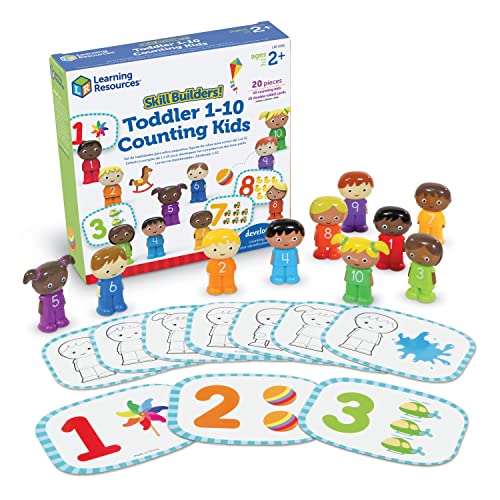
Skill Builders! 1-10 Counting Set
Best early counting · Learning Resources

Skill Builders! 1-10 Counting Set

Counting you can hold. Ten chunky number cards pair with colored counters a toddler places one-by-one — and that physical act of putting down one counter per number is "one-to-one correspondence," the real foundation of counting that rote "1-2-3" recitation skips right over. It's self-correcting and concrete, the way early math should be at two and three. Pieces are big enough to be toddler-safe, and it doubles as a color-sorting set on the days numbers aren't the mission.

Builds: counting · color matching · one-to-one correspondence

~$11· See it on Amazon

How much to spend

You really don't need to spend much on a toddler. Several of the best toys here are around $10Huey the Fine Motor Hippo, the Skill Builders counting set, the Chatter Telephone, and the shape-sorting cube all punch above their price. The $13–18 range (the Hape pound-and-tap bench, the sorting truck, the pound-and-roll tower) is where a generous birthday or holiday gift lands. Honestly, there's little reason to go past $20 for a toy at this age — simple and sturdy beats expensive and electronic almost every time.

Frequently asked questions

What are the best learning toys for a toddler?
Start with the classics that have lasted for a reason: a wooden shape-sorting cube (our top pick from Melissa & Doug), a stacking toy, and a chunky first puzzle. For movement, a Fisher-Price Corn Popper or a Hape pound-and-tap bench gives a new walker a reason to keep going. For fine motor, Learning Resources Huey the Fine Motor Hippo builds the pincer grasp. Every toy in this guide comes from an established maker — Melissa & Doug, Fisher-Price, Hape, or Learning Resources.
What skills do toddlers develop most through play?
Three big ones. Gross motor — walking, climbing, pushing — which is why push and pound toys earn their shelf space. Fine motor, especially the pincer grasp that crayons and pencils will need, which knob puzzles and feed-the-animal toys train directly. And early language, which grows through pretend play and naming, so a chatter phone or a sound puzzle does real work. Toddlers learn all of it by doing, not watching — the more a toy does on its own, the less your child is.
How much should I spend on a toddler gift?
Not much at all. Several of the best toddler toys here are around $10 — Huey the Fine Motor Hippo, the Skill Builders counting set, the Fisher-Price Chatter Telephone, and the shape-sorting cube all punch far above their price. A $16–18 toy like the Hape pound-and-tap bench or a sorting truck makes a generous birthday or holiday gift. There is very little reason to spend more than $20 on a toy for this age.
Are wooden toys better than plastic for toddlers?
Not automatically, but the best toddler toys do tend to be the simple ones, and many of those happen to be wood. Solid-wood shape sorters, stackers, and puzzles survive being thrown, chewed, and stepped on, and they keep a toddler doing the playing rather than pressing a button to make the toy perform. That said, a couple of plastic classics — the Fisher-Price Corn Popper and Chatter Telephone — earn their place because the mechanics, not a battery, drive the fun. Skip the toys that mostly light up and talk on their own.
What is a safe first puzzle for a one-year-old?
A chunky-knob puzzle with very few pieces, like the Melissa & Doug First Play Jumbo Knob Safari Puzzle — just three big animal pieces, each with a fat wooden knob sized for a whole fist. Big knobs train the pincer grasp safely, and few pieces means a toddler can actually finish, which is what keeps them coming back. Avoid small pieces and high piece counts at this age; the goal is a real "I did it" win, not a challenge.

How we choose — and a word on the links

Educational Toys Planet has specialized in learning toys since 2004. We pick independently, only from established makers, then cross-check every candidate against current availability and the major independent award and expert lists. We don't accept payment for placement.

Affiliate disclosure: the product links here are Amazon Associate links. If you buy through them we may earn a small commission at no extra cost to you — that's what keeps these guides free and updated. Prices change; tap through for Amazon's current figure. Last updated June 2026.

Related guides